

Selim the Grim
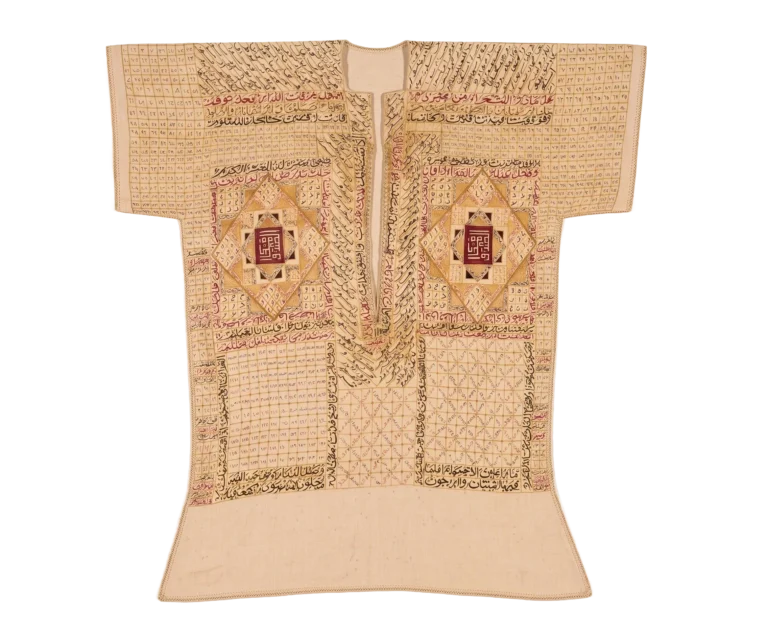
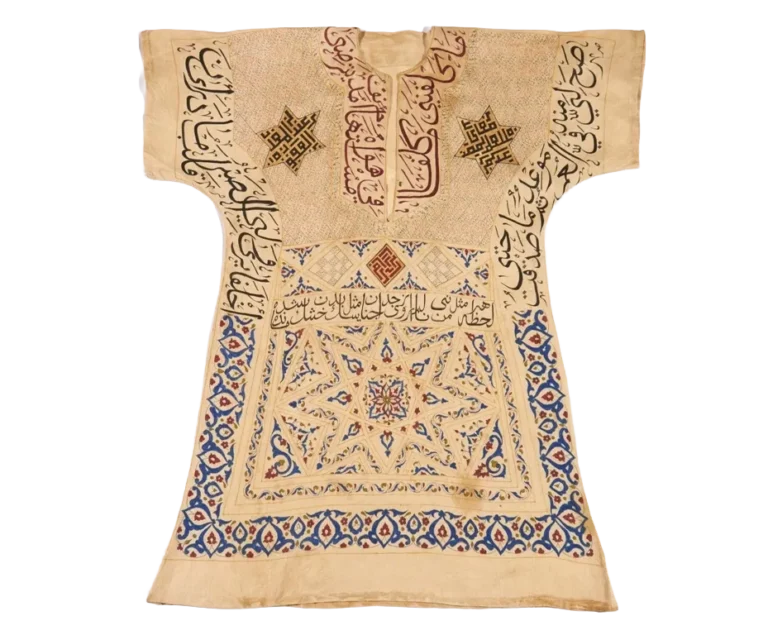
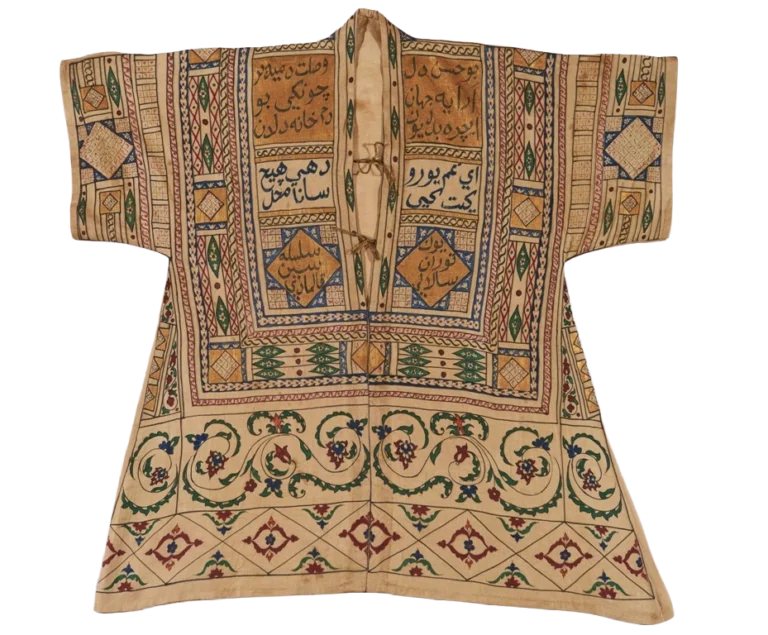
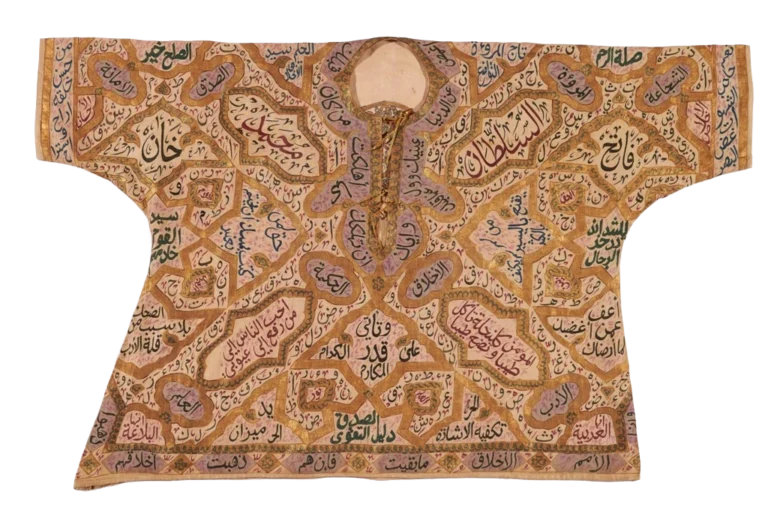
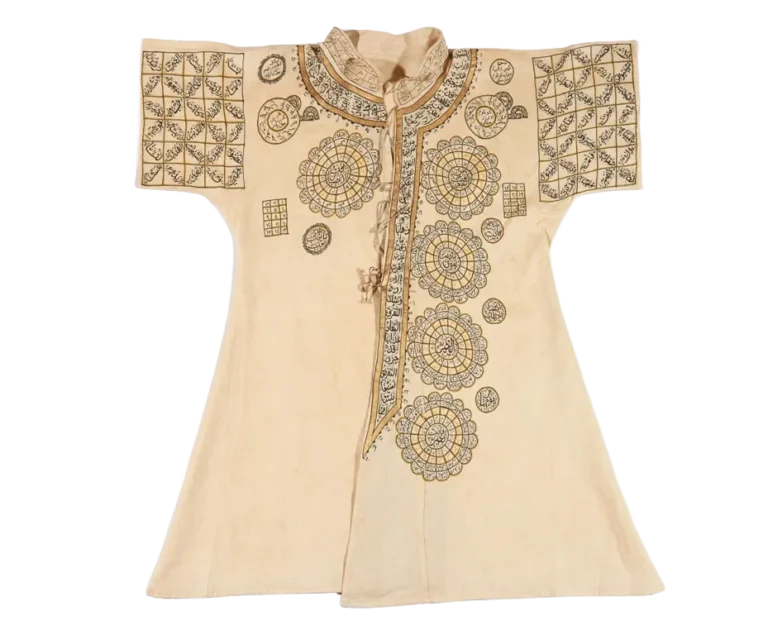
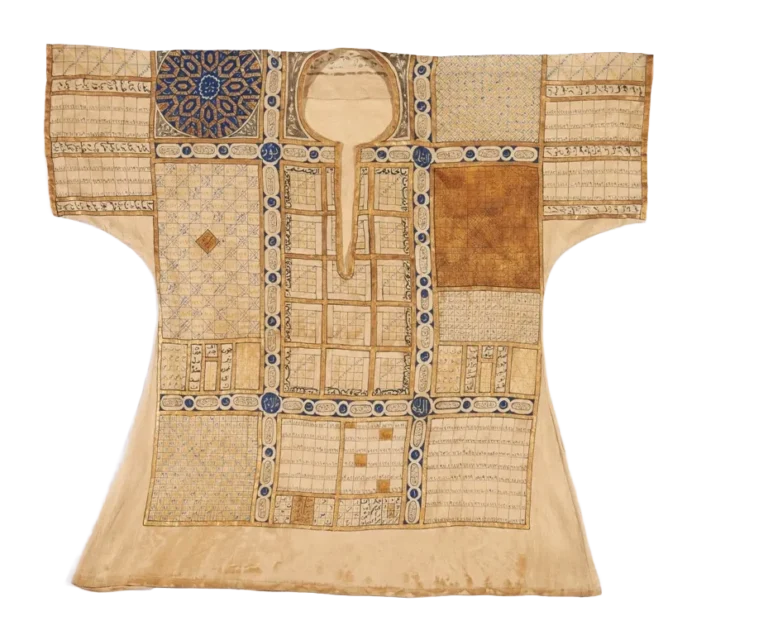
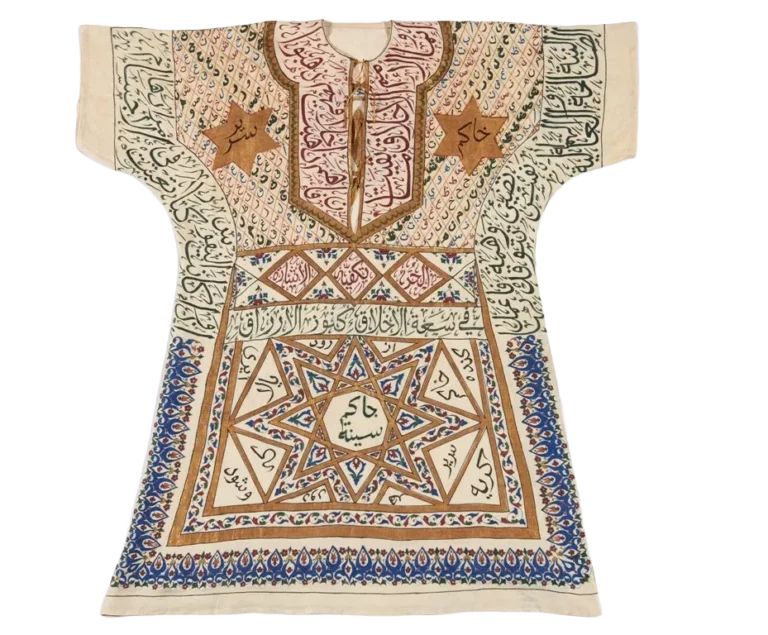
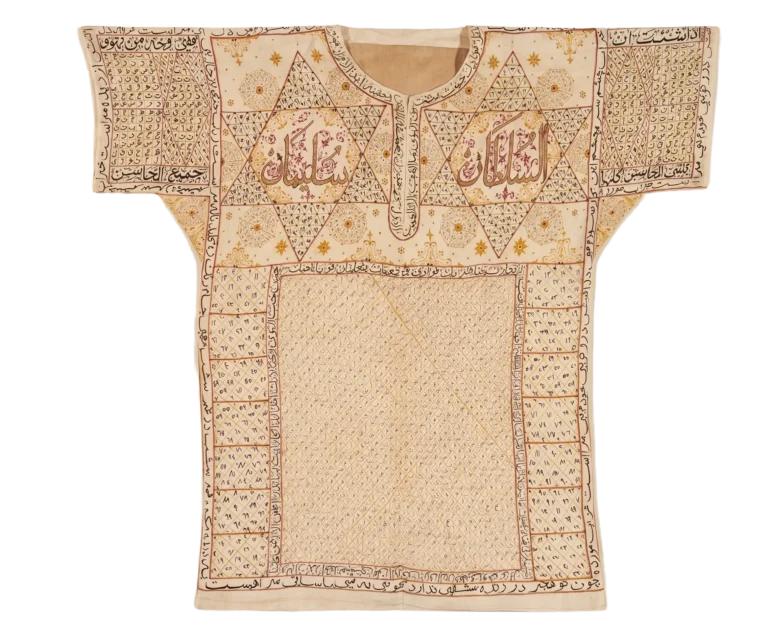
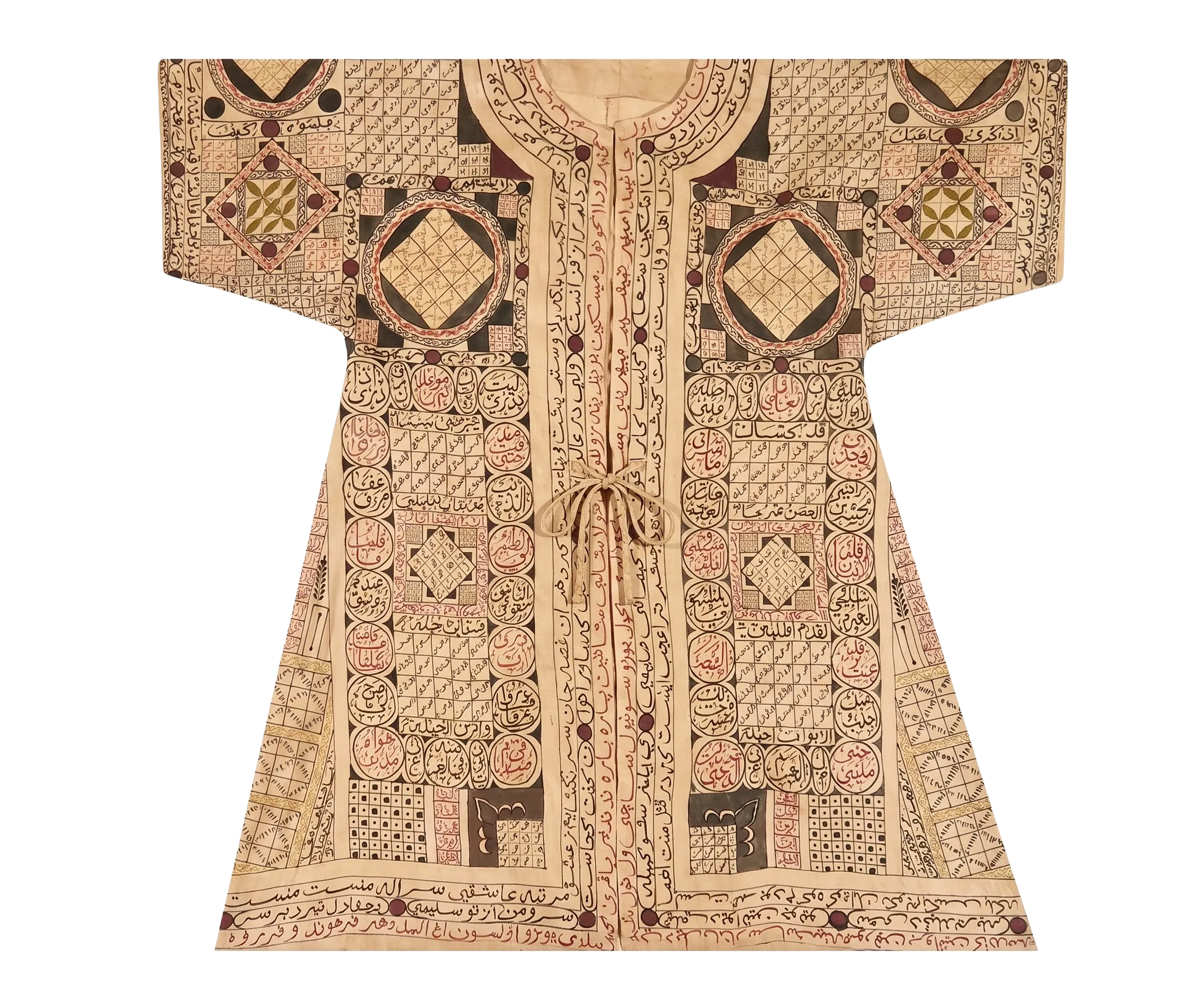
This replica from the 16th century exhibited in your room is of one of the 87 talismanic shirts from the Collection of Sultan’s Clothing at Topkapi Palace and it is considered to have belonged to Selim the Grim according to the prayers, motives and meanings of the talisman on the shirt and therefore was adorned with one of his poems…
May this Talisman give you health, long life and victory…
Selim the Grim is one of the sultans of Ottoman Empire about whom numerous myths were spread. He was son to Bayezid II and Gulbahar Hatun, born in 1470 and died in 1520. He was thoroughly educated in mathematics, religion, social, physical, political and military sciences of the era by the best teachers of the time; he was as well able to speak Arabic and Persian good enough to write a poetry book in each language. He was a poet, he valued love massively. He was also a religious person. Selim rebelled and dethroned his father Bayezid and dramatically expanded the frontiers of the Empire. Below text about the Sultan who had excessive respect for science and teachers despite of his majestic nature is completely based on a true story.
After the victory of Battle of Ridanieh in 1517, Selim the Grim who provided peace on the holy ground was going back to Istanbul with his army.
During the journey, the mud splashing from the hooves of his mentor Kemal Pasazade’s horse dirtied the Sultan’s kaftan.
Kemal Pasazade was embarrassed, frightened, could not know what to say. All the witnesses were waiting in fear for his reaction.
The Sultan who saw his master’s face and after eyeing around with a smile he consoled his master saying:
"The mud coming from the hooves of my master’s horse is rather an honour for me. Make it my will; spread this kaftan as it is over my coffin when I die!"
When Selim the Grim got sick, his teachers resorted to a talismanic shirt to find cure for their Sultan. They consulted the Head Augur. The Head Augur designated the propitious moment for talisman to be the most effective. A shirt got tailored quickly, became ready to wear after the calligraphers writings were completed. They worked even faster as the Sultan of the world was despairingly sick.
After intensive work, the shirt from white cotton cloth is short sleeved and collarless with front slit. What makes the shirt interesting is the various powerful prayers and prophecies on both front and back side of the shirt. These are kinds of talismans that are made of numbers and letters. They are often known for their use against evil eyes and witchery. These prayers and prophecies are some sort of precaution for dreadful events in the future. There are also Surahs that act as a shield against diseases, bring victory to the warrior, protect the owner of this talismanic shirt. Sadly, beloved Sultan of the masters who had this special shirt made never got to wear the shirt. Despite of the meticulous couture and particular composition, deficient calligraphs show that the shirt was rushed.
Regrettably, the winds were the carrier of the news that Selim the Grim passed away from this world; his kaftan with the dirt from the hooves of his master’s horse was spread over his coffin as he bequeathed so.